Written in a 5-7-5 syllable rely, conventional Japanese haiku are three-line poems that date again to the thirteenth century. Typically incorporating photographs from nature, haiku turned a direct and generally intense method to categorical ourselves. The simplicity makes it accessible to folks of virtually any studying degree, making any such poetry excellent for the classroom. Want some inspiration? We’ve put collectively this record of enjoyable haiku poems for teenagers of all ages. Use these haiku examples to get everybody prepared to write down their very own!
FREE PRINTABLE
Free Haiku Worksheets
Simply fill out the shape on this web page to seize our free printable haiku starter worksheets for a simple and enjoyable classroom poetry exercise.
What Is Haiku?
Haiku is a standard type of Japanese poetry that consists of three strains following a 5-7-5 syllable sample. Haiku typically captures a fleeting second in nature, expresses deep feelings, or conveys a seasonal reference (that is referred to as “kigo” in Japanese). This fashion of poetry is understood for its simplicity, vivid imagery, and talent to evoke robust emotions in only a few phrases.
Instance Haiku:
Autumn breeze whispers,
Golden leaves dance on the bottom,
Silent sky turns grey.
This haiku captures the transition of autumn, utilizing sensory particulars and motion to convey the scene to life. The brief construction makes haiku good for instructing college students about syllables, imagery, and the right way to say extra with fewer phrases.
Haiku Poems for Youngsters
1. A Morning (Haiku) by Arun Bahadur Gurung
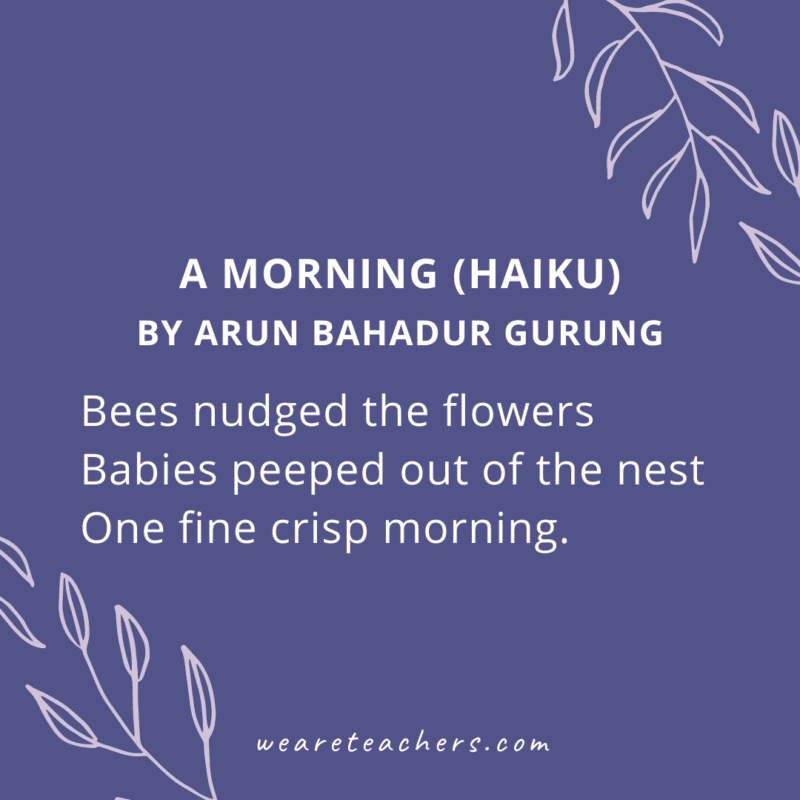
“Bees nudged the flowers …”
Themes: Nature, renewal, peaceable moments
Literary gadgets: Imagery, personification, sensory particulars
This haiku captures a tranquil morning scene the place bees work together with flowers, emphasizing concord in nature. It’s a terrific alternative for instructing college students how haiku use small moments to evoke bigger themes of life and renewal.
2. Haiku Year by Paul Holmes
“Pleasant show
Snowdrops bow their pure white heads
To the solar’s glory.”
Themes: Seasonal modifications, statement, appreciation of nature
Literary gadgets: Vivid imagery, symbolism, juxtaposition
This haiku displays the great thing about winter, utilizing snowdrops as a fragile image of seasonal transition. It’s helpful for discussing how haiku typically deal with the pure world and the way small particulars can counsel broader themes.
3. Spring Is in the Air by Kaitlyn Guenther
“Spring is within the air
Flowers are blooming sky excessive
Kids are laughing.”
Themes: Development, renewal, vitality of spring
Literary gadgets: Metaphor, sensory imagery, alliteration
This haiku celebrates the arrival of spring with vibrant, uplifting imagery. It’s nice for exploring how haiku convey motion and liveliness in only a few phrases, making it a enjoyable instance for youthful college students.
4. October’s Gold by Paul Holmes
“Like crunchy cornflakes
Gold leaves rustle underfoot
Magnificence in decay.”
Themes: Autumn, transformation, fleeting magnificence
Literary gadgets: Simile, onomatopoeia, seasonal reference
By evaluating fallen leaves to “crunchy cornflakes,” this haiku provides a playful, relatable contact to autumn imagery. It’s good for instructing figurative language and the way sensory particulars improve the reader’s expertise.
5. The Pink Summer Sphere by Suh Joon Kim

“The nippiness, worming in …”
Themes: Change, nature’s cycles, distinction
Literary gadgets: Symbolism, distinction, personification
This haiku probably describes a summer time fruit, probably a watermelon, utilizing exact language to evoke a way of fleeting seasonal pleasure. It’s helpful for discussing how haiku depend on delicate but highly effective imagery to create a way of place and feeling.
6. Beaches by Kaitlyn Guenther
“Sand scatters the seashore
Waves crash on the sandy shore
Blue water shimmers.”
Themes: Nature, leisure, motion
Literary gadgets: Imagery, alliteration, personification
This haiku captures the energetic but peaceable essence of the seashore, utilizing vivid sensory particulars to explain sand, waves, and the ocean breeze. It’s a terrific instance of how haiku can transport readers to a selected setting with only a few phrases.
7. Mellow May by Patricia L. Cisco
“Mellow, gentle, Could day,
Calling kids out to play.
Summer season’s on her approach!”
Themes: Spring, renewal, tranquility
Literary gadgets: Alliteration, seasonal reference, tender imagery
This haiku conveys the calm and heat of a Could day, utilizing light language and repetition to create a soothing rhythm. It’s good for instructing how phrase alternative influences temper and the way haiku replicate seasonal magnificence.
8. Autumn Love by Savannah M. Jones
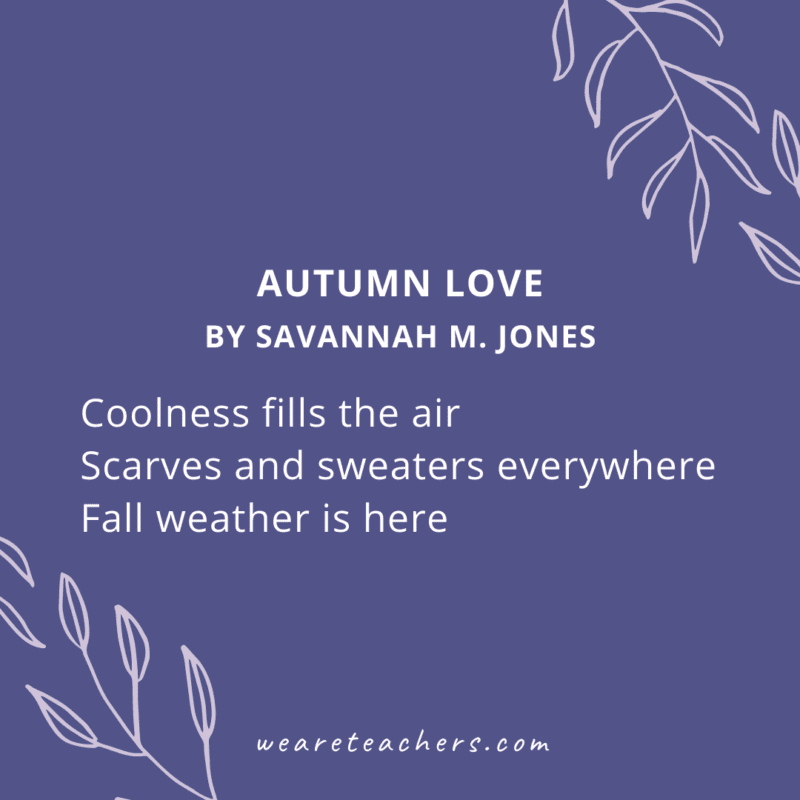
“Coolness fills the air …”
Themes: Change, nostalgia, seasonal magnificence
Literary gadgets: Personification, sensory imagery, distinction
This haiku evokes the crispness of autumn air, utilizing easy but efficient language to replicate each the bodily and emotional modifications that include the season. It’s a robust instance for discussing how haiku seize fleeting moments.
9. Snowflakes Haiku by Kaitlyn Guenther
“Snowflakes are our associates
They descend when winter comes
Making white blankets.”
Themes: Winter, playfulness, appreciation for nature
Literary gadgets: Metaphor, repetition, childlike marvel
This haiku presents snowflakes as pleasant and magical, making it an accessible and fascinating piece for youthful readers. It’s helpful for discussing how haiku can personify nature to create heat and pleasure even in chilly settings.
10. Meteor Shower by Michael Dylan Welch
“meteor bathe …
a delicate wave
wets our sandals.”
Themes: Marvel, impermanence, connection to nature
Literary gadgets: Distinction, imagery, minimalism
This haiku superbly contrasts the vastness of house with the light motion of a wave, emphasizing the fleeting nature of a meteor bathe. It’s a superb instance of how haiku typically discover deep, contemplative themes in a easy, elegant approach.
Haiku Poems for Center and Excessive Faculty
11. In a Station of the Metro by Ezra Pound
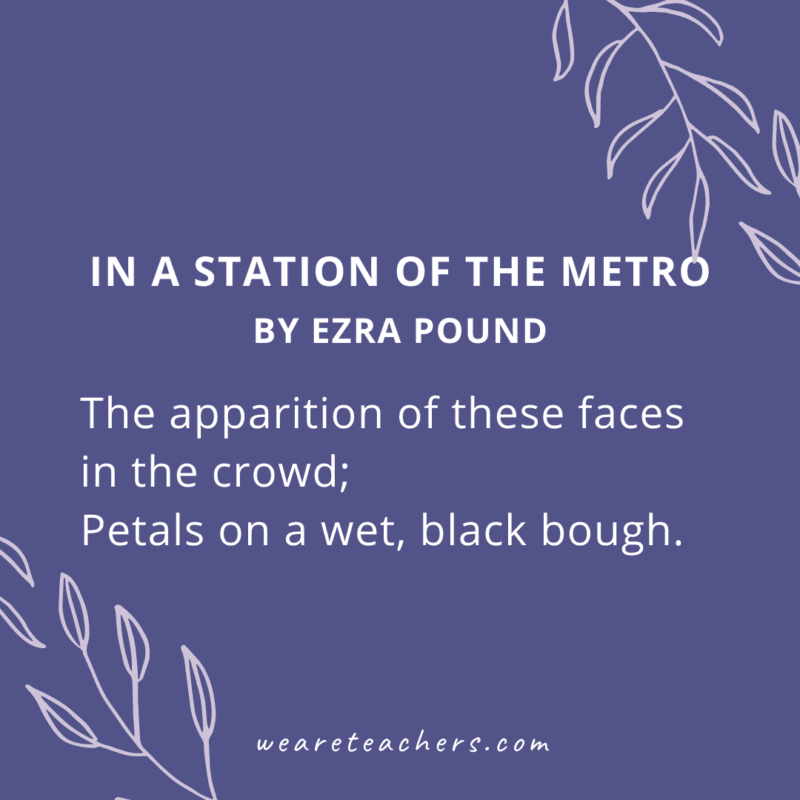
“The apparition of those faces
within the crowd …”
Themes: Transience, trendy life, fleeting magnificence
Literary gadgets: Imagery, juxtaposition, metaphor
Although not a standard haiku, this well-known imagist poem follows haiku-like ideas with its brevity and sharp distinction between the faces within the metro and petals on a department. It’s glorious for discussing how trendy poetry adapts haiku strategies to seize temporary however highly effective moments.
12. The light of a candle by Yosa Buson
“The sunshine of a candle
is transferred to a different candle—
spring twilight.”
Themes: Continuity, kindness, impermanence
Literary gadgets: Symbolism, simplicity, metaphor
This haiku makes use of the picture of a candle’s flame passing from one to a different as a metaphor for shared knowledge, kindness, or life itself. It’s a terrific instance for discussing how haiku use minimalism to specific profound truths.
13. Haiku Ambulance by Richard Brautigan
“A chunk of inexperienced pepper
fell
off the picket salad bowl:
so what?”
Themes: Absurdity, notion, randomness
Literary gadgets: Surrealism, distinction, surprising imagery
This unconventional haiku presents a humorous and surreal distinction between one thing peculiar (a inexperienced pepper) and one thing pressing (an ambulance). It’s helpful for exploring how trendy haiku can break conventional guidelines to create stunning and thought-provoking imagery.
14. A Poppy Blooms by Katsushika Hokusai

“I write, erase, rewrite …”
Themes: Creativity, persistence, imperfection
Literary gadgets: Repetition, symbolism, private reflection
This haiku likens the method of writing to the fragile blooming of a poppy, emphasizing the wrestle and pleasure of creation. It’s glorious for discussing how haiku can replicate private experiences whereas sustaining their connection to nature.
15. Summer Haibun by Aimee Nezhukumatathil
“the cool evening earlier than
star showers: so sticky so
heat so full of sunshine.”
Themes: Reminiscence, seasonal change, sensory expertise
Literary gadgets: Haibun type (prose + haiku), imagery, distinction
This poem blends haibun—a mix of prose and haiku—to create a wealthy, immersive second that captures summer time’s environment. It’s a terrific piece for introducing college students to haibun as a poetic type and exploring how sensory particulars convey poetry to life.
16. After the Gentle Poet Kobayashi Issa by Robert Hass
“New Yr’s morning—
all the things is in blossom!
I really feel about common.”
Themes: Renewal, pleasure, appreciation for all times
Literary gadgets: Seasonal reference (kigo), simplicity, distinction
This haiku honors Issa’s light fashion, celebrating the contemporary begin of a brand new yr with a way of marvel. It’s nice for discussing how haiku seize temporary but significant moments and the way poets pay tribute to those that encourage them.
17. Haiku by Etheridge Knight
“Jap guard tower
glints in sundown; convicts relaxation
like lizards on rocks.”
Themes: Confinement, fleeting magnificence, distinction
Literary gadgets: Juxtaposition, symbolism, simile
Written from the angle of an incarcerated individual, this haiku contrasts the harshness of jail life with the pure great thing about a sundown. It’s a robust piece for discussing how haiku can categorical deep feelings and social commentary by easy imagery.
18. fallen leaves by John Brandi
“fallen leaves
the abbot sweeps
round them”
Themes: Impermanence, mindfulness, simplicity
Literary gadgets: Seasonal reference (kigo), personification, symbolism
This haiku captures the quiet second of an abbot sweeping fallen leaves, symbolizing each bodily and non secular cleaning. It’s good for discussing how haiku replicate Zen philosophy and the appreciation of on a regular basis moments.
19. [The earth shakes] by Steve Sanfield
![[The earth shakes] by Steve Sanfield “just enough…”](https://classroomwishlist.com/wp-content/uploads/2025/02/Haiku-Poems-6-800x800.png "21 Fun Haiku Poems for Kids of All Ages")
“The earth shakes …”
Themes: Nature’s energy, change, stability
Literary gadgets: Minimalism, sensory imagery, distinction
This haiku subtly describes an earthquake’s light motion, leaving house for interpretation. It’s a terrific instance of how haiku use simplicity and restraint to evoke bigger, generally unsettling themes.
20. The bottoms of my shoes by Jack Kerouac
“The bottoms of my sneakers
are clear
from strolling within the rain.”
Themes: Transience, journey, self-reflection
Literary gadgets: Humor, minimalism, private tone
Kerouac, identified for his free-spirited method to haiku, makes use of this one to replicate on motion and detachment. It’s helpful for discussing how haiku could be playful but profound, and the way Beat poets tailored the shape to go well with their very own voices.
21. [the snow is melting] by Kobayashi Issa
“The snow is melting
and the village is flooded
with kids.”
Themes: Change, impermanence, nature’s cycles
Literary gadgets: Seasonal reference (kigo), distinction, imagery
Issa captures the pure transition from winter to spring, exhibiting each the sweetness and penalties of melting snow. This haiku is nice for discussing how nature displays the passage of time and the way haiku use easy language to convey deeper meanings.
22. Age Ten by Benna Crawford
“I don’t do dishes
My room is a rubbish dump
Mother will not be joyful.”
Themes: Childhood, independence, humor
Literary gadgets: Hyperbole, distinction, informal tone
This playful haiku captures the messy, carefree world of a 10-year-old utilizing humor and exaggeration. It’s a superb instance of how haiku can replicate trendy, on a regular basis experiences and be relatable to younger readers.
23. Heaven’s Photoshoot by Imteyaz
“After I see lightning,
I wish to assume that the sky
captures Earth’s magnificence.”
Themes: Marvel, nature’s energy, fleeting magnificence
Literary gadgets: Metaphor, imagery, personification
This haiku compares lightning to a photoshoot within the sky, turning a pure occasion right into a putting visible. It’s nice for exploring metaphor and the way haiku can remodel on a regular basis sights into one thing magical.
24. Fishing With Grandpa by Shawn Sackman
“I really feel it tugging
Hanging on—It have to be big!
Bluegill, smiles, grandpa.”
Themes: Persistence, pleasure, household bonding
Literary gadgets: Suspense, sensory imagery, private reflection
This haiku builds pressure because the speaker feels a fish tugging, making it a terrific instance of how haiku can seize a quick however memorable second. It’s good for discussing how poets use pacing and imagery to create emotion in only a few strains.
25. Family Love Is by Michele Meleen
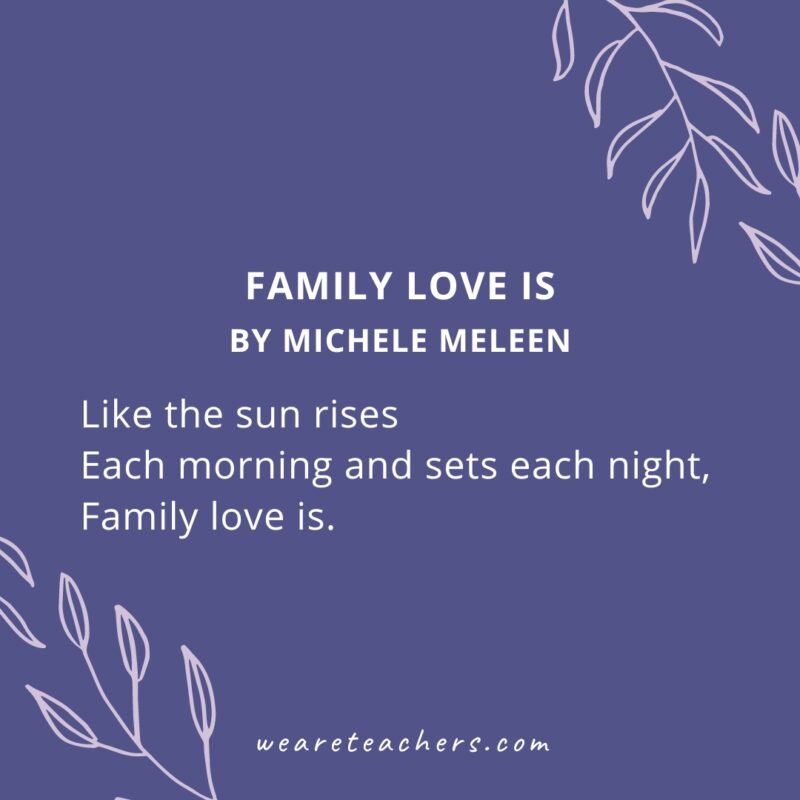
“Just like the solar rises …”
Themes: Unconditional love, heat, stability
Literary gadgets: Simile, symbolism, pure imagery
By evaluating household like to the rising solar, this haiku expresses heat and consistency. It’s a terrific alternative for discussing how similes and nature imagery could make summary concepts really feel tangible and common.
26. School by Benna Crawford
“My homework is late
Canine ate it earlier than breakfast
Very useful canine.”
Themes: Duty, childhood, humor
Literary gadgets: Irony, distinction, informal tone
This haiku humorously captures the relatable panic of late homework, making it a enjoyable piece for college kids. It’s a terrific instance of how trendy haiku can replicate on a regular basis experiences whereas retaining a lighthearted tone.
27. Japanese Hokku by Lewis Grandison Alexander
“Life goes by shifting,
Up and down a sequence of moods
Wanting what’s nothing.”
Themes: Time, motion, impermanence
Literary gadgets: Symbolism, repetition, philosophical tone
This poem displays on the passage of time and life’s fixed motion. It’s a superb alternative for discussing how haiku typically deal with impermanence (mujō), a core idea in conventional Japanese poetry.
28. [An ancient pond!] by Matsuo Basho
“An historical pond!
With a sound from the water
Of the frog because it plunges in.”
Themes: Stillness, nature, timelessness
Literary gadgets: Juxtaposition, sensory imagery, simplicity
This well-known haiku captures a second of deep stillness, disrupted by the sudden splash of a frog. It’s typically used to show kigo (seasonal references), kireji (chopping phrases), and the essence of conventional haiku—statement and minimalism.
29. Happiness by Benna Crawford
“I acquired an A-plus
So Dad purchased me an ice cream
My life is ideal.”
Themes: Pleasure, accomplishment, childhood
Literary gadgets: Repetition, distinction, private tone
This haiku captures a toddler’s pleasure over getting an A-plus, exhibiting how small victories convey nice happiness. It’s good for discussing how easy phrases can evoke robust feelings.
30. Over the Wintry by Natsume Sōseki

“Over the wintry
Forest, winds howl in rage …”
Themes: Isolation, quietness, seasonal change
Literary gadgets: Imagery, distinction, temper
This haiku (typically translated as “Over the wintry / Forest, winds howl in rage / With no leaves to blow”) paints a vivid image of a chilly, barren panorama. It’s nice for discussing how haiku use seasonal imagery to replicate feelings and environment.
31. Haiku by Ray McNiece
“I shovel snow
from Cleveland entrance garden
simply to see inexperienced.”
Themes: Arduous work, nature, persistence
Literary gadgets: Distinction, sensory imagery, minimalism
This haiku captures the trouble of shoveling snow, an earthly but meditative act, to disclose inexperienced grass beneath. It’s a terrific instance of how haiku can replicate easy day by day duties whereas subtly conveying endurance and accomplishment.
32. Happy Birthday by Benna Crawford
“It’s your birthday however
Didn’t get you something
Youngsters are at all times broke.”
Themes: Humor, friendship, honesty
Literary gadgets: Irony, informal tone, directness
This playful haiku captures the awkwardness of forgetting a present whereas nonetheless acknowledging the big day. It’s helpful for discussing how trendy haiku can take a lighthearted and relatable method to on a regular basis conditions.
33. [The faint shadow of the morning moon?] by Yone Noguchi
“Nay, the snow falling on the earth.
The mist of blossoming flowers?
Nay, poetry smiling up the sky.”
Themes: Phantasm, impermanence, pure magnificence
Literary gadgets: Distinction, symbolism, seasonal reference (kigo)
This haiku presents a delicate distinction between the fading moon and the falling snow, emphasizing the fleeting nature of each. It’s glorious for instructing how haiku typically distinction two pure parts to create a deeper sense of impermanence.
34. [The cry of the cicada] by Matsuo Basho
![[The cry of the cicada] by Matsuo Basho.](https://classroomwishlist.com/wp-content/uploads/2025/02/Haiku-Poems-9-800x800.jpg "Haiku Poems 9")
“The cry of the cicada
Provides us no signal …”
Themes: Stillness, transience, reflection
Literary gadgets: Juxtaposition, seasonal reference (kigo), sound imagery
This well-known haiku focuses on the cry of the cicada, which paradoxically symbolizes silence and stillness. It’s good for exploring how haiku use paradox and sensory particulars to evoke advanced feelings.
35. Blind Boone’s Apparitions by Tyehimba Jess
“my motto for all times
– advantage, not sympathy, wins –
my track in opposition to demise.”
Themes: Music, resilience, creative imaginative and prescient
Literary gadgets: Metaphor, historic reference, symbolism
This haiku references John “Blind” Boone, a musician identified for overcoming obstacles. It’s helpful for discussing how haiku can honor historic figures whereas utilizing minimal phrases to convey deep which means.
36. Birds Punctuate the Days by Joyce Clement
“apostrophe
the nuthatch inserts itself
between feeder and pole”
Themes: Nature, language, statement
Literary gadgets: Metaphor, wordplay, symbolism
This haiku cleverly connects punctuation to fowl conduct, utilizing a nuthatch as an “apostrophe.” It’s a terrific instance for discussing how haiku can mix nature and language in inventive methods.
37. Laundry by Benna Crawford
“The place are my clear socks?
These scent worse than rotten fish
Time to do laundry.”
Themes: On a regular basis life, frustration, humor
Literary gadgets: Rhetorical query, minimalism, simile
This haiku humorously captures the all-too-common wrestle of lacking socks. It’s a enjoyable alternative for discussing how haiku could be relatable and lighthearted whereas nonetheless following the normal type.
38. [A cloud of flowers!] by Matsuo Basho
“A cloud of flowers!
Is the bell Uyeno
Or Asakusa?”
Themes: Transience, magnificence, nature
Literary gadgets: Seasonal reference (kigo), imagery, sensory particulars
This haiku describes cherry blossoms (sakura), a well-known image of renewal in Japanese poetry. It’s glorious for discussing how haiku replicate seasonal magnificence and the fleeting nature of life.
39. 5 & 7 & 5 by Anselm Hollo
“comply with that airplane
in fact I’m excessive that is
an emergency.”
Themes: Journey, motion, intrigue
Literary gadgets: Fashionable haiku type, imagery, immediacy
This up to date haiku follows the construction however provides a contemporary twist by capturing the motion of an airplane. It’s helpful for exhibiting how haiku can evolve whereas nonetheless preserving their essence.
40. Nine Haiku by TC Tolbert
“I really like the absolutely
inflated tire upright in
gravel—close to the automobile.”
Themes: Commentary, transformation, on a regular basis magnificence
Literary gadgets: Fragmented imagery, free verse affect, distinction
This haiku displays an appreciation for small, peculiar objects (like an inflated tire) and transforms them into poetic moments. It’s nice for discussing how trendy haiku broaden on conventional themes in progressive methods.
41. [’Twas the new moon!] by Matsuo Basho
![[‘Twas the new moon!] by Matsuo Basho. - Haiku Poems for Kids](https://classroomwishlist.com/wp-content/uploads/2025/02/Haiku-Poems-10-800x800.jpg "Haiku Poems 10")
“Since then I waited …”
Themes: Anticipation, time, nature’s cycles
Literary gadgets: Seasonal reference (kigo), imagery, persistence as a theme
This haiku captures the speaker’s ready from the brand new moon onward, emphasizing the quiet passage of time. It’s a superb alternative for discussing how haiku typically replicate on persistence and the pure rhythms of life.
42. Christmas by Benna Crawford
“Santa is coming
He rewards good conduct
No presents for me.”
Themes: Vacation pleasure, good and unhealthy conduct, reward and punishment
Literary gadgets: Repetition, rhythm, trigger and impact
This haiku captures the anticipation of Christmas Eve, making it an attractive poem for youthful readers. It’s a terrific instance of how haiku can replicate cultural traditions and particular moments.
43. Haikus by Willie Perdomo
“This night’s Black sound
Walks like a cat on grass blades
Your nickname two-steps.”
Themes: Identification, sound, cultural expression
Literary gadgets: Sensory imagery, symbolism, simile
This haiku explores the connection between sound and cultural identification, utilizing concise, highly effective language. It’s helpful for discussing how haiku can deal with private and social themes past nature.
44. Conversation in Isolation by Harryette Mullen
“Neighbors nail the planks
dividing their yard from mine.
Our sturdy fence.”
Themes: Separation, trendy life, division
Literary gadgets: Irony, distinction, personification
This haiku displays on bodily and emotional isolation, with neighbors constructing limitations slightly than speaking. It’s nice for discussing how haiku can deal with up to date themes in a minimalist but impactful approach.
45. Spring by Benna Crawford
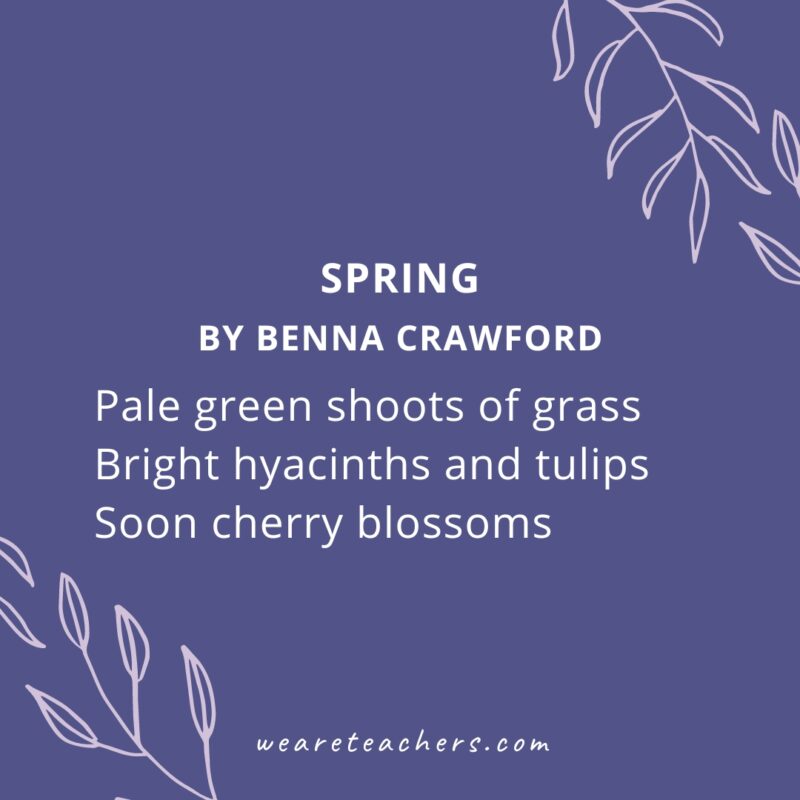
“Pale inexperienced shoots of grass …”
Themes: Renewal, seasonal transition, development
Literary gadgets: Imagery, symbolism, seasonal reference (kigo)
This haiku captures the arrival of spring by the picture of contemporary grass shoots, symbolizing new beginnings. It’s a terrific instance for instructing how haiku use nature to characterize bigger concepts like hope and renewal.
46. [Ah! the waving lespedeza,] Matsuo Basho
“Ah! the waving lespedeza,
Which spills not a drop
Of the clear dew!”
Themes: Nature’s magnificence, stillness, impermanence
Literary gadgets: Personification, imagery, seasonal reference (kigo)
This haiku focuses on lespedeza (bush clover), a plant typically related to autumn in Japanese poetry. The imagery of the plant’s motion with out spilling a drop conveys a way of concord and stability, making it a terrific instance of how haiku seize small but profound moments in nature.
47. A World of Dew by Kobayashi Issa
“A world of dew,
And inside each dewdrop
A world of wrestle.”
Themes: Impermanence, struggling, magnificence in small moments
Literary gadgets: Metaphor, symbolism, sensory imagery
Issa’s haiku displays on the transient nature of life by dewdrops, a typical image of impermanence in Japanese poetry. It’s a superb piece for discussing how haiku can categorical deep philosophical concepts by easy, pure imagery.
48. Anger by Benna Crawford
“Tonight I’m a bee
Buzzing and darting about
Making ready to sting.”
Themes: Emotion, frustration, transformation
Literary gadgets: Metaphor, distinction, symbolism
By evaluating anger to a bee’s conduct, this haiku makes use of a putting metaphor as an example the speaker’s emotional state. It’s helpful for discussing how haiku can seize human feelings by vivid, relatable photographs.
49. Haiku [i am moving in] by Sonia Sanchez
![Haiku [i am moving in] by Sonia Sanchez.](https://classroomwishlist.com/wp-content/uploads/2025/02/Haiku-Poems-12-800x800.jpg "Haiku Poems 12")
“air amazon lady naked …”
Themes: Power, identification, self-discovery
Literary gadgets: Free verse affect, fragmented construction, trendy haiku method
This up to date haiku departs from the normal type whereas sustaining the essence of haiku’s brevity and deal with a single second. It’s nice for exploring how trendy poets adapt haiku to deal with themes of identification and empowerment.
50. The Old Pond by Matsuo Basho
“Previous pond …
a frog jumps in
water’s sound”
Themes: Stillness, nature, sudden change
Literary gadgets: Seasonal reference (kigo), juxtaposition, onomatopoeia
One of the well-known haiku of all time, this poem captures the second of a frog leaping into an previous pond, breaking the silence with a splash. It’s good for discussing how haiku use distinction and sound to create a vivid, timeless picture.
51. Lines on a Skull by Ravi Shankar
“life’s little, our heads
unhappy. Redeemed and losing clay
this opportunity. Be of use.”
Themes: Mortality, impermanence, reflection
Literary gadgets: Symbolism, distinction, philosophical tone
This haiku displays on life’s fleeting nature utilizing the imagery of a cranium, a robust image of demise. It’s a terrific instance of how haiku could be philosophical and thought-provoking, making it helpful for discussions on impermanence and the human situation.
52. O snail by Kobayashi Issa
“O snail,
climb Mt. Fuji,
however slowly, slowly.”
Themes: Persistence, persistence, resilience
Literary gadgets: Metaphor, symbolism, simplicity
Issa makes use of the gradual motion of a snail as a metaphor for perseverance, exhibiting that even small steps can result in nice achievements. This haiku is ideal for discussions about dedication and the way haiku typically discover deep which means in peculiar issues.
53. I want to sleep by Masaoka Shiki
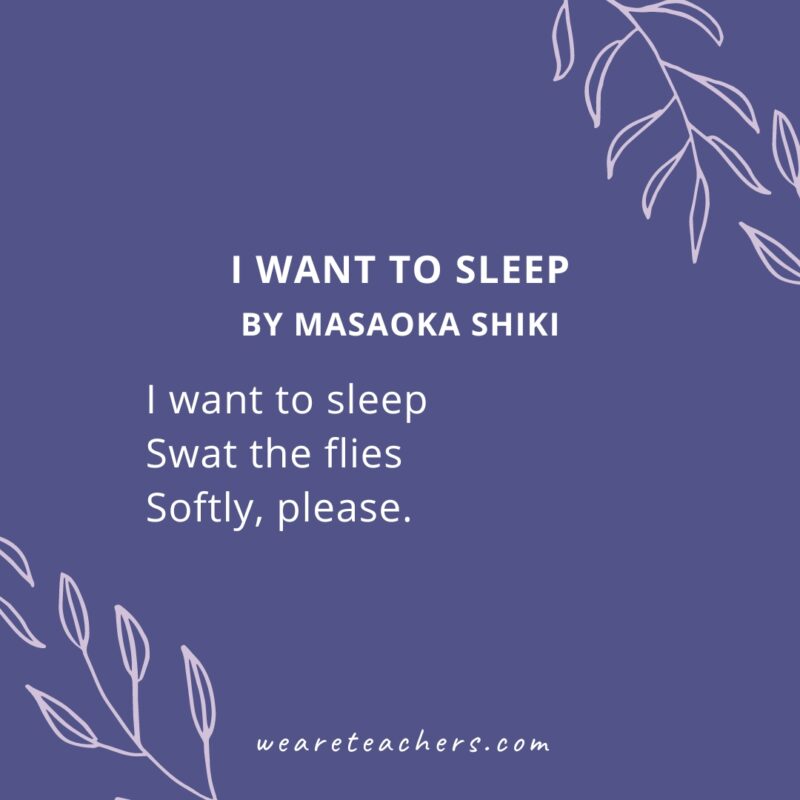
“Swat the flies …”
Themes: Relaxation, irritation, humor
Literary gadgets: Crucial tone, imagery, simplicity
This haiku humorously expresses frustration at being disturbed whereas making an attempt to sleep, capturing a relatable second. It’s helpful for exhibiting how haiku can depict on a regular basis experiences with each simplicity and emotion.
54. Winter Solitude by Matsuo Basho
“winter solitude—
a world of 1 coloration
the sound of wind”
Themes: Isolation, stillness, seasonal magnificence
Literary gadgets: Imagery, distinction, symbolism
This haiku paints an image of a quiet, snow-covered world, utilizing “one coloration” to emphasise the stillness of winter. It’s a terrific instance of how haiku use minimal phrases to evoke robust feelings and a way of environment.
55. I am nobody by Richard Wright
“I’m no one:
A purple sinking autumn solar
Took my title away.”
Themes: Identification, insignificance, nature’s energy
Literary gadgets: Distinction, symbolism, existential tone
By pairing self-erasure with the setting solar, this haiku displays on identification and impermanence. It’s a superb alternative for discussing how haiku can discover deep existential themes in only a few strains.
56. Haiku (The low yellow …) by Jack Kerouac
“The low yellow
moon above the
Quiet lamplit home.”
Themes: Nature, statement, motion
Literary gadgets: Imagery, simplicity, Beat poetry affect
Kerouac’s haiku captures a second of quiet statement, reflecting the Beat era’s appreciation for spontaneous magnificence. It’s helpful for exploring how haiku can embrace a contemporary, free-flowing fashion whereas sustaining conventional themes.
57. Haiku (The Taste …) by Jack Kerouac

“The style
of rain …”
Themes: Sensory expertise, mindfulness, nature
Literary gadgets: Sensory imagery, minimalism, immediacy
This haiku distills a easy but profound second—the style of rain—into its essence. It’s good for discussing how haiku seize fleeting sensory experiences and the way minimal phrases can evoke robust feelings.
58. Haiku [for you] by Sonia Sanchez
“love between us is
speech and breath. loving you is
an extended river operating.”
Themes: Love, connection, motion
Literary gadgets: Metaphor, rhythm, fluidity
Sanchez’s haiku superbly compares like to speech, breath, and a flowing river, emphasizing its pure and steady presence. It’s a superb instance of how trendy haiku can discover themes past nature whereas sustaining the normal type’s depth and ease.
Get free printable haiku worksheets:

Simply fill out the shape on this web page to seize our free printable haiku starter worksheets for a simple and enjoyable classroom poetry exercise.
We hope you loved these haiku poems for teenagers. Need extra poetry ideas? You should definitely subscribe to our newsletters so you will get our newest picks.
Plus, take a look at Must-Share Poems for Your Elementary Classroom.

Trending Merchandise