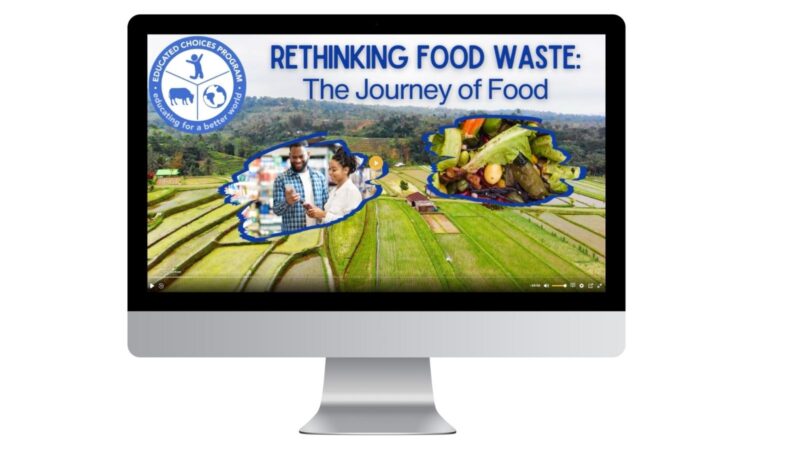
Rethinking Food Waste by Educated Choices Program makes educating about sustainability and meals waste each partaking and academic. With a complete lesson plan, video assets, and interactive actions, academics have all the things they should spark significant conversations about meals waste and its environmental impacts. Plus, it’s free, which is a large bonus for academics and colleges.
To see how this program works in an actual classroom, we requested environmental educator and trainer Christine Arsenis to check out the Rethinking Meals Waste lesson along with her middle-grade environmental membership. Right here’s her Trainer Picks assessment and why she recommends this program for different educators.
Who’s this system an excellent match for?
I’m in New Jersey and used the Rethinking Meals Waste program with my Seventh and eighth graders (children 12 to 14 years previous) in my environmental membership. As an entire, the lesson package deal is effectively suited to all college students ages 12 and up (Seventh grade and up).
Does this product align with curriculum requirements?
My faculty makes use of NGSS (Subsequent Era Science Requirements) for our district. I do know this lesson met requirements of each Sustainability and Pure Sources and Their Administration. (You can even discover all the standards listed out for all of their applications proper right here.)
How did you employ the Rethinking Meals Waste program in your classroom?
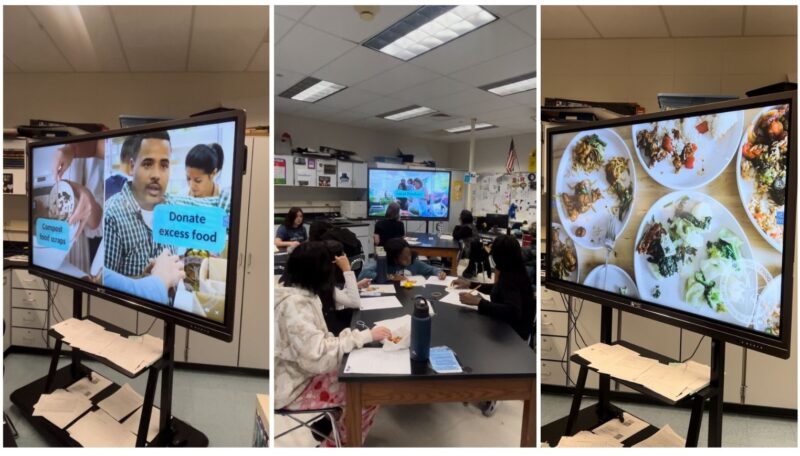
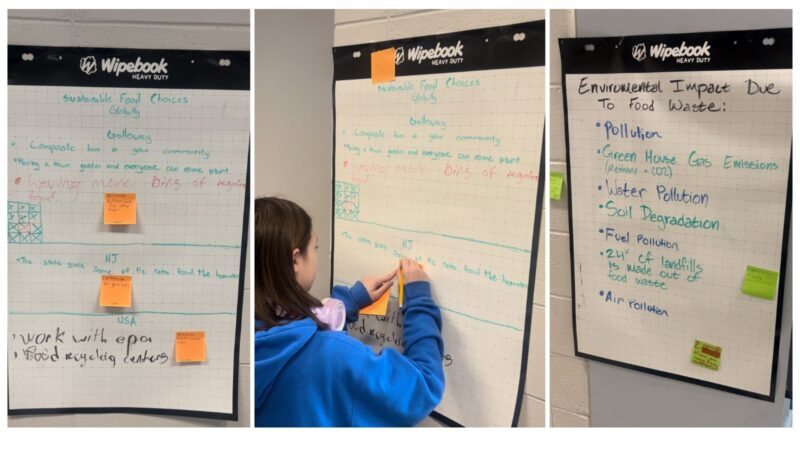
We used the lesson-created video about meals waste, the quiz, and one of many lesson plans that comes with the supplies. We additionally accomplished a number of the advised actions. As an illustration, my college students strengthened key ideas from the video by creating vertical shows of their information. The actions aligned effectively with our membership’s mission of gathering breakfast every day from our homerooms to donate to a neighborhood church’s meals pantry.
How did your college students like Rethinking Meals Waste?
Total, my college students had been pretty impressed with Rethinking Meals Waste. The half they loved essentially the most was working with the guided observe from the Day 2 lesson the place they had been requested to seek out methods to outline environmental impacts, levels of the meals provide chain, and sustainable decisions.
To assist my college students begin their pondering course of, I put them into three teams. Every group targeted on one in all three subjects— the environmental affect of meals waste, the levels of the meals provide chain, or sustainable decisions to scale back meals waste regionally, statewide, and nationally.
My college students working collectively to bounce concepts off one another, not solely from the video but in addition their very own private experiences, was improbable. It made the video content material appear extra reasonable and relevant to each day life.
Would you say that is a straightforward program for academics to implement?
All of the supplies in addition to the video from the Educated Decisions Program library are very intuitive. The movies are very clear. They supply an ideal abstract portion towards the top to wrap up concepts and assist college students bear in mind the contents of the video. I recognize how the lesson guides are simple to observe and supply an entire set for educators who want to complement their curriculum with related info.
What makes this program distinctive?
I like the flexibility amongst various kinds of educators. The entire studying package deal, from the video to the guided notes and all the things in between, offers educators with virtually an entire week’s classes for his or her college students.
I appreciated the readability of the Educated Decisions Program’s lesson guides and the standard of every lesson day. I additionally preferred that educators have the pliability so as to add their very own aptitude to every lesson package deal.
How does it prevent time or make educating simpler?
Having a plan to observe by way of with every lesson package deal is improbable. These plans, in addition to the corresponding requirements they cowl, make this simple for academics of all backgrounds to make use of with their college students. I might see it working for a well being or bodily schooling class, an economics class, a science class, and a household and shopper science class. Educated Decisions Program studying packages actually do cater to all kinds of educators.
How do you propose to make use of the Educated Decisions applications once more sooner or later?
As a Seventh-grade science trainer, one in all our three essential subjects consists of environmental science, which is our last unit for the varsity 12 months. Whereas each Seventh-grade pupil completes a culminating undertaking in late Might generally known as NatureFest, the place they conduct a analysis undertaking about an organism or biome native to New Jersey, we don’t get to spend so much of time interested by meals and agriculture. I might see my college students having fun with different applications by way of Educated Decisions, akin to Way forward for Meals, The Planet and Our Plates, and Rising Neighborhood Roots. These subjects emphasize a world perspective whereas serving to academics join them to native and statewide ranges. These packages might assist spur pupil pondering for his or her NatureFest initiatives.
Did your college students have any aha moments, and if that’s the case, what had been they?
My college students had been stunned to see how a lot of our meals comes from different nations/continents. As an illustration, India is the nation that produces essentially the most dairy cows and merchandise. It made them need to verify their meals labels extra or firms they gravitate towards for meals and snacks to see their origin of manufacturing.
How do you assume this system will make college students have a look at meals waste otherwise sooner or later?
My membership college students run a program the place we gather unopened breakfast gadgets throughout homeroom. Now that my college students perceive meals waste and its affect on our native and world group, we are able to put their information into motion. We’ll apply what they’ve discovered to our each day breakfast assortment and monitor how our faculty has decreased meals waste.
Check out Christine’s assessment of this free program within the classroom by way of the video beneath.

Trainer Picks is a sponsored program accessible from We Are Academics. All opinions shared within the assessment are trustworthy and primarily based on the trainer’s direct expertise. To study extra about our pointers and assessment course of, click here.
Trending Merchandise