This summer season, Idaho joined a rising listing of states introducing restrictions on what lecturers can and may’t say or present of their school rooms. The newest goal? A regulation banning posters, flags, and different shows that categorical what lawmakers deem “political, non secular, or ideological” viewpoints in Ok–12 public faculties.
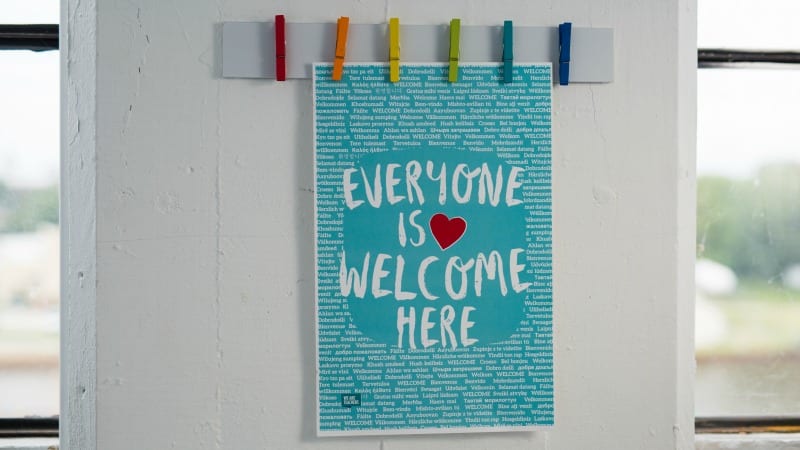
Among the many first casualties is a once-uncontroversial poster that reads “Everyone Is Welcome Here.”
The controversy started earlier this yr within the West Ada College District when 6th grade teacher Sarah Inama was instructed by administrators to remove the poster from her classroom. Inama refused, arguing that the message was not political however merely an affirmation of inclusion and security for all college students.
After weeks of back-and-forth, she selected to resign reasonably than take the signal down. Her story gained nationwide consideration, prompting widespread assist from educators, dad and mom, and college students alike.
Within the wake of the incident, the Idaho Legislature handed Home Invoice 41, which formally bans lecturers from displaying supplies that may very well be thought-about ideological in nature. The regulation took impact on July 1.
However for a lot of lecturers, this isn’t nearly a poster. It’s concerning the broader message being despatched to college students and to the educators who serve them.
Why is “Everybody Is Welcome Right here” controversial?
On its face, “Everybody Is Welcome Right here” looks like a message few would oppose. It has lengthy been utilized in school rooms to create a way of security and belonging—particularly for college students who could really feel marginalized resulting from race, faith, gender id, sexual orientation, incapacity, or immigration standing.
However based on Idaho legislators who backed the regulation, the phrase has taken on what they describe as a political undertone. Lawmakers argue that such signage, even when broadly worded, indicators assist for “ideologies” they imagine must be saved out of public faculties.
Supporters of Home Invoice 41 say the regulation is important to maintain school rooms impartial and targeted on lecturers. Critics argue it’s a smokescreen for erasing affirmations of variety and inclusion below the guise of neutrality.
On the coronary heart of the controversy is that this query:
Whenever you inform college students “everyone seems to be welcome,” who would possibly hear that and really feel threatened?
And extra pointedly—what does it say concerning the present local weather if a easy message of belonging is handled as too political to show?
Which college students aren’t welcome in school rooms, based on legislators?
They’re too afraid to say it. However we already know who.
What’s subsequent?
For educators in Idaho and elsewhere, this isn’t only a authorized change—it’s an ethical take a look at. Throughout the nation, lecturers are being squeezed between their dedication to college students and the more and more politicized directives from lawmakers.
They’re being informed to be impartial in a time that calls for readability.
They’re being informed that kindness, empathy, and affirmation could be seen as threats.
They’re being informed to take a seat down and be quiet.
Academics: In case you’re horrified at being requested to adjust to these pointers, don’t be. Simply preserve asking provocative questions:
- “How about quotes from historic figures concerning justice or equality?”
- “Simply curious: Are we banning posters highlighting different optimistic habits and character traits?”
- “Ought to I change my ‘Everybody Is Welcome’ signal with one that claims ‘Most of you might be tentatively accepted right here until in any other case legislated’?”
In case you’re able to get in good hassle, now’s the time. You can begin by downloading our free “Everyone Is Welcome Here” poster, pictured beneath.
One last item
For years as a center college trainer, I taught Warriors Don’t Cry by Melba Pattillo Beals, one of many Little Rock 9. The guide particulars her expertise integrating Central Excessive College in 1957.
My college students—no matter political background—had been horrified by how Black college students had been handled. However what made them angriest wasn’t simply the racism. It was the cowardice and complicity of the adults in cost.
They requested:
- “Why didn’t anybody cease the governor?”
- “Did the principal ever apologize?”
- “Why was everybody so obsessive about hating them? All they needed to do was go to high school.”
Fifty years from now, historical past college students will ask related questions on this second.
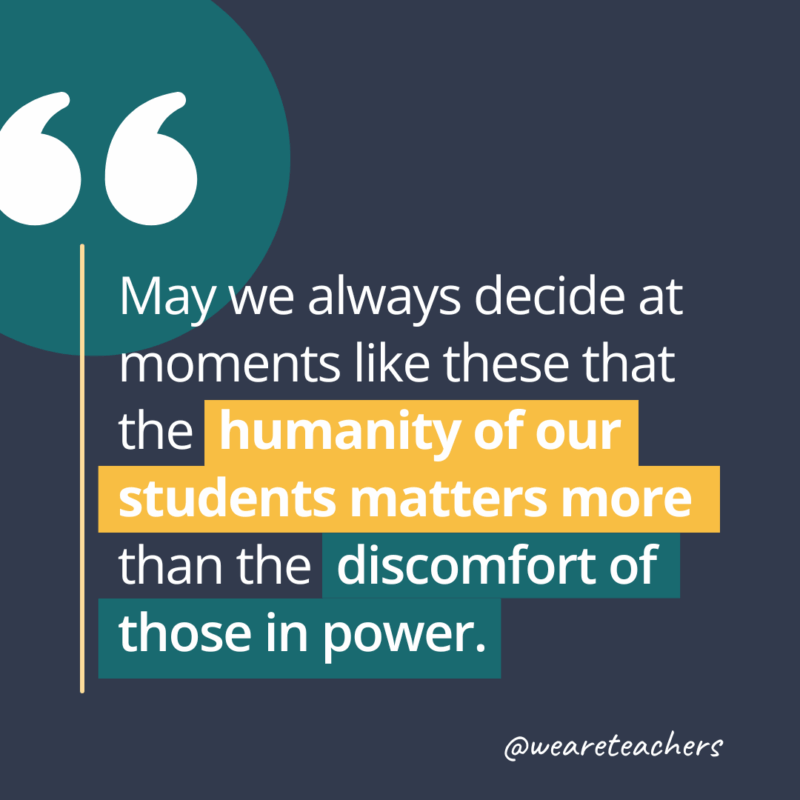
Could we resolve now, like Sarah Inama did, that the humanity of our college students issues greater than the discomfort of these in energy.
For extra articles like this, be sure you subscribe to our newsletters.
Trending Merchandise